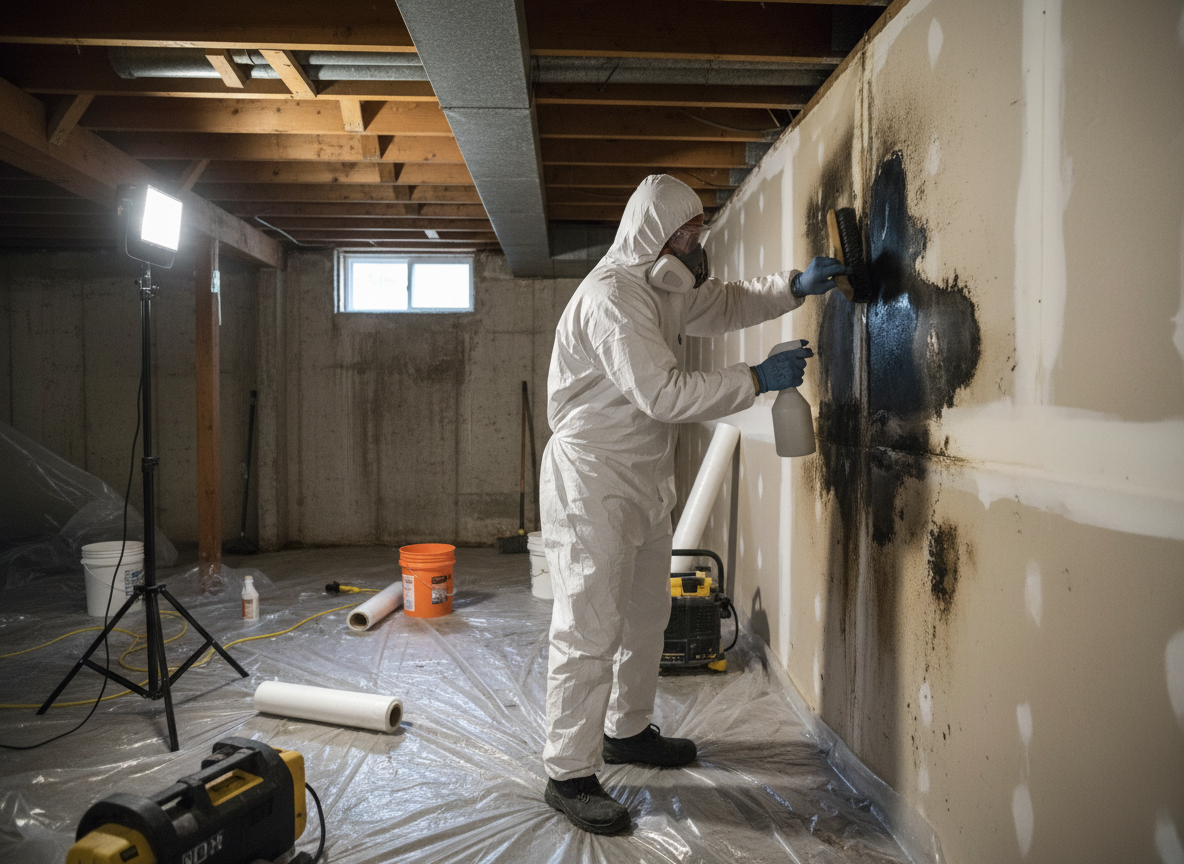
Bryn Mawr homes often feature older construction with crawl spaces and attics that trap moisture from seasonal rains and poor grading around foundations. When water enters through roof leaks or plumbing failures, mold colonies form quickly on drywall, insulation and wood framing. An affordable approach starts with targeted moisture mapping rather than whole-house demolition, allowing removal of affected sections while preserving sound materials. Technicians must follow containment protocols to avoid spreading spores into living areas, especially in single-story ranch homes common along streets near Juanita St.
Edge cases in the Bryn Mawr area include mold growth behind textured ceilings or inside HVAC ducts where condensation builds during warmer months. Removing porous materials like carpet padding or particleboard cabinets is usually required, while hard surfaces can be cleaned with approved antimicrobial agents. Local building practices sometimes leave limited access points, so crews bring specialized cameras and borescopes to locate hidden colonies without unnecessary wall removal. Proper disposal of contaminated debris follows San Bernardino County guidelines to prevent cross-contamination at the job site.
Homeowners frequently overlook the need for source correction before remediation begins. Simply cleaning visible mold without fixing the water intrusion leads to rapid regrowth, particularly in neighborhoods where irrigation runoff collects near slab foundations. An affordable remediation plan therefore includes a written moisture source report and recommendations for ventilation or grading improvements that owners can implement afterward. Final clearance testing confirms spore levels have returned to normal background ranges for the region.
Technician insight
In Bryn Mawr, the thing that catches most people out with affordable mold remediation is water trapped under older slab foundations along Juanita St and nearby streets, where cracked concrete and poor perimeter drainage let moisture wick upward into baseboards long after the rain stops.
Crawl Space Mold After Irrigation Leak
Problem: Musty odor in a Bryn Mawr home near the address. What we found: Mold on joists from a broken irrigation line that had soaked the soil under the crawl space. What we did: Installed containment, removed affected insulation, treated wood, and improved ventilation. Outcome: Odor eliminated and homeowner given grading advice to reduce future moisture.
How it works
- 1
Initial Inspection
Technician arrives within hours, maps moisture with meters, and identifies visible and hidden mold locations.
- 2
Containment Setup
Plastic barriers and negative air machines isolate the work zone to prevent spore migration into clean areas.
- 3
Material Removal
Affected drywall, insulation and other porous items are cut out and bagged for proper disposal.
- 4
Cleaning and Drying
Hard surfaces receive antimicrobial treatment while dehumidifiers and air movers dry remaining structure.
- 5
Final Clearance
Post-remediation inspection and optional air sampling confirm the space meets acceptable standards.
Pricing
Upfront quotes provided after inspection; cost varies with extent of hidden growth and access challenges.