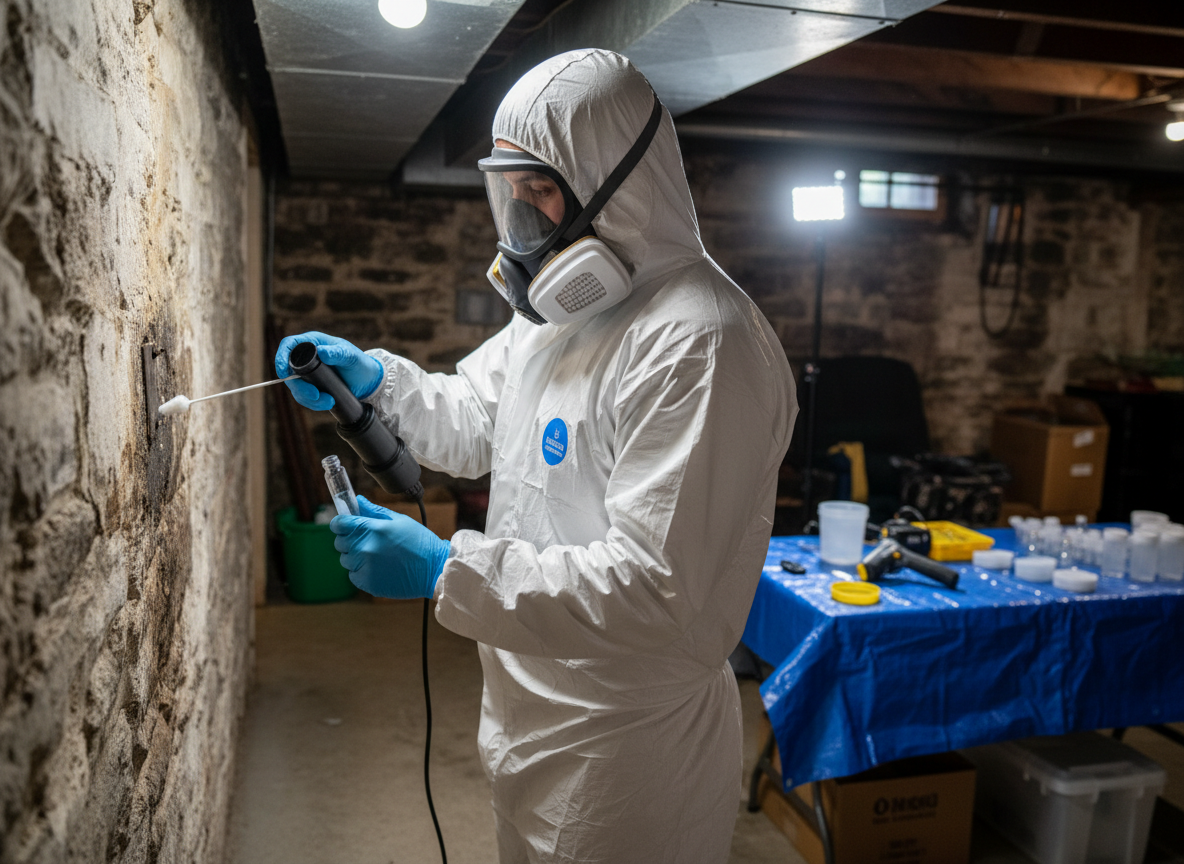
Mold testing in Bryn Mawr homes often involves air and surface sampling because many properties along Juanita St and surrounding streets feature older construction with crawl spaces and attics that trap moisture after winter rains. Technicians collect samples from multiple locations including HVAC systems and wall cavities to identify species and concentration levels that visual checks alone cannot reveal. Lab results then guide whether remediation is required or if the issue stays contained to one area.
Edge cases in the Bryn Mawr area include false negatives from DIY kits that miss hidden growth behind drywall in homes built on sloped lots where drainage directs water toward foundations. Professional testing uses calibrated pumps and tape lifts to capture viable spores and non-viable fragments, then compares indoor versus outdoor baselines to rule out normal environmental levels common in San Bernardino County. Reports include chain-of-custody documentation and recommendations that align with local building practices.
Clearance testing after any cleanup work confirms spore counts have returned to background levels before occupants re-enter affected rooms. This step matters in Bryn Mawr because re-entrainment of spores through shared walls in older duplexes can quickly spread issues to adjacent units if not verified. The process documents every sample location with photos and maps so property owners have a record for insurance or future sales.
Seasonal Considerations
Bryn Mawr experiences dry summers that can mask active growth until the first rains, so testing before peak winter months helps catch problems early in attics and under-floor areas typical of the local housing stock.
Technician insight
In Bryn Mawr, the thing that catches most people out with Mold Testing is moisture trapped in the crawl spaces of older homes near Juanita St where seasonal runoff from nearby slopes keeps soil damp long after storms pass.
Attic Odor Investigation
Homeowner on Juanita St reported musty smells after heavy rain. Testing located elevated spores in the attic insulation above the main living area. Air samples confirmed the source and clearance testing verified removal after targeted treatment.
How it works
- 1
Initial Call and Scheduling
Discuss symptoms and schedule a 24/7 visit to the Bryn Mawr property.
- 2
On-Site Assessment
Walk through all accessible areas including crawl spaces and attics while noting moisture sources.
- 3
Sample Collection
Perform air, surface, and bulk sampling at targeted locations based on observed conditions.
- 4
Laboratory Analysis
Send samples to an accredited lab for species identification and spore count quantification.
- 5
Detailed Report Delivery
Provide written findings with photos, lab data, and next-step recommendations.
Pricing
Costs depend on the number of samples required and property size; quotes provided after the initial assessment.