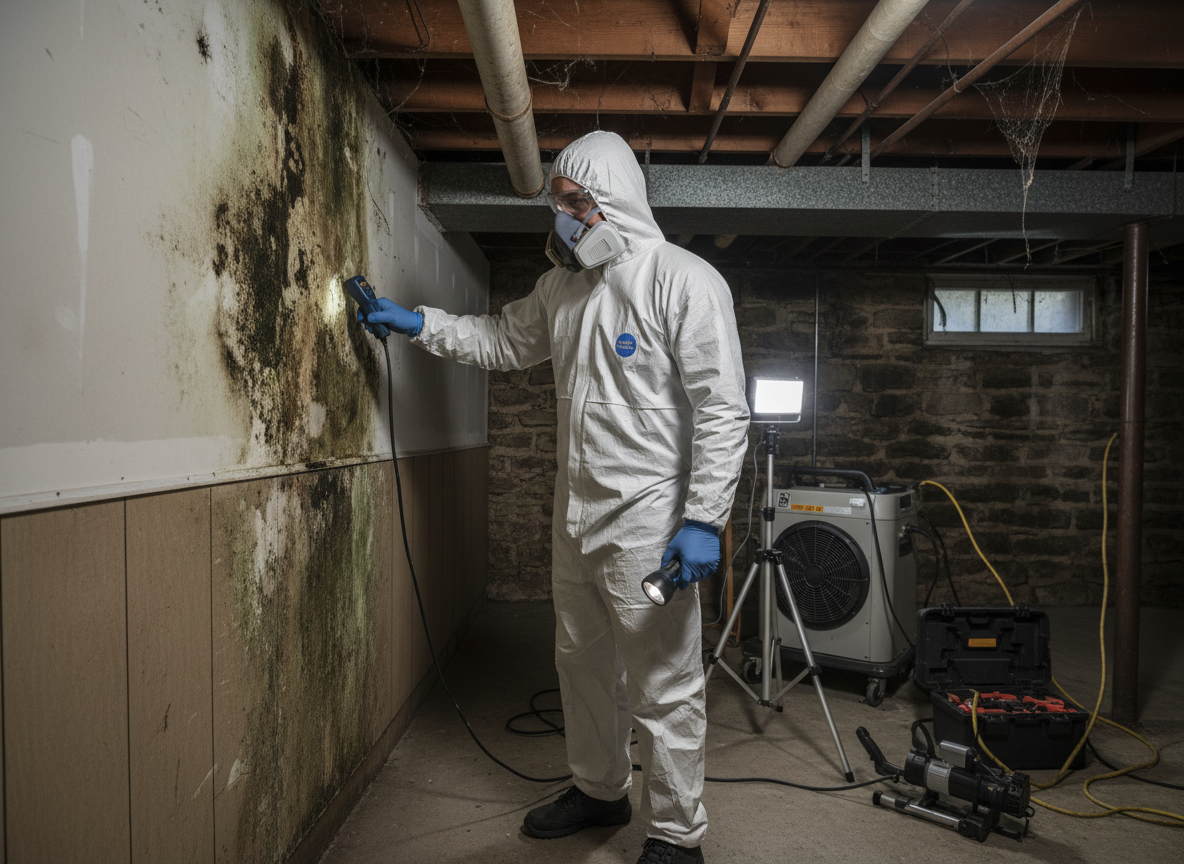
Bryn Mawr homes built mostly between the 1940s and 1970s often feature stucco exteriors and slab foundations that trap moisture after the infrequent but intense winter rains common in San Bernardino County. During inspection we focus on crawl spaces, attic sheathing, and bathroom walls where poor original venting allows condensation to form behind drywall. We use moisture meters and thermal imaging to locate active leaks from aging galvanized plumbing without unnecessary demolition.
San Bernardino County building codes require proper ventilation in enclosed spaces, yet many Bryn Mawr properties near the 10 freeway still lack updated soffit vents. This creates pockets where mold can establish after even modest roof leaks from summer monsoons. Our inspectors check HVAC returns and ductwork because spores travel easily through shared walls in these older tract homes.
Edge cases we see regularly include mold in detached garages converted to ADUs and in homes backing onto the Santa Ana River wash where seasonal flooding raises soil moisture against foundations. We always document visible growth and elevated moisture readings so homeowners understand exactly which areas need attention before any remediation begins.
Inspection reports include photos, moisture logs, and recommendations tailored to Bryn Mawr’s dry climate that still sees sudden humidity spikes during Santa Ana winds. We note any code-related ventilation shortfalls that could affect future insurance claims or property sales.
Technician insight
In Bryn Mawr, the thing that catches most people out with Mold Inspection is how the 1950s slab homes along Juanita Street and nearby streets hold water against the foundation after even light rains because the original perimeter grading has settled over decades.
Post-Rain Growth in Bryn Mawr Garage Conversion
A homeowner noticed musty odor in a converted garage after winter rains. We found elevated moisture in the slab edge and behind baseboards where grading sloped inward. Samples confirmed Penicillium growth. We documented the source and handed off to remediation without opening walls.
How it works
- 1
Initial Consultation
Discuss property history, recent leaks, and visible signs over the phone or on site at 25967 Juanita St.
- 2
Visual and Moisture Survey
Walk-through of all accessible areas using meters and cameras to map damp zones in Bryn Mawr homes.
- 3
Targeted Sampling
Air or surface samples collected only where readings indicate active growth for lab analysis.
- 4
Detailed Reporting
Written findings with photos, moisture data, and prioritized next steps delivered within 48 hours.
Pricing
Cost depends on square footage, number of stories, and access difficulty in Bryn Mawr properties.