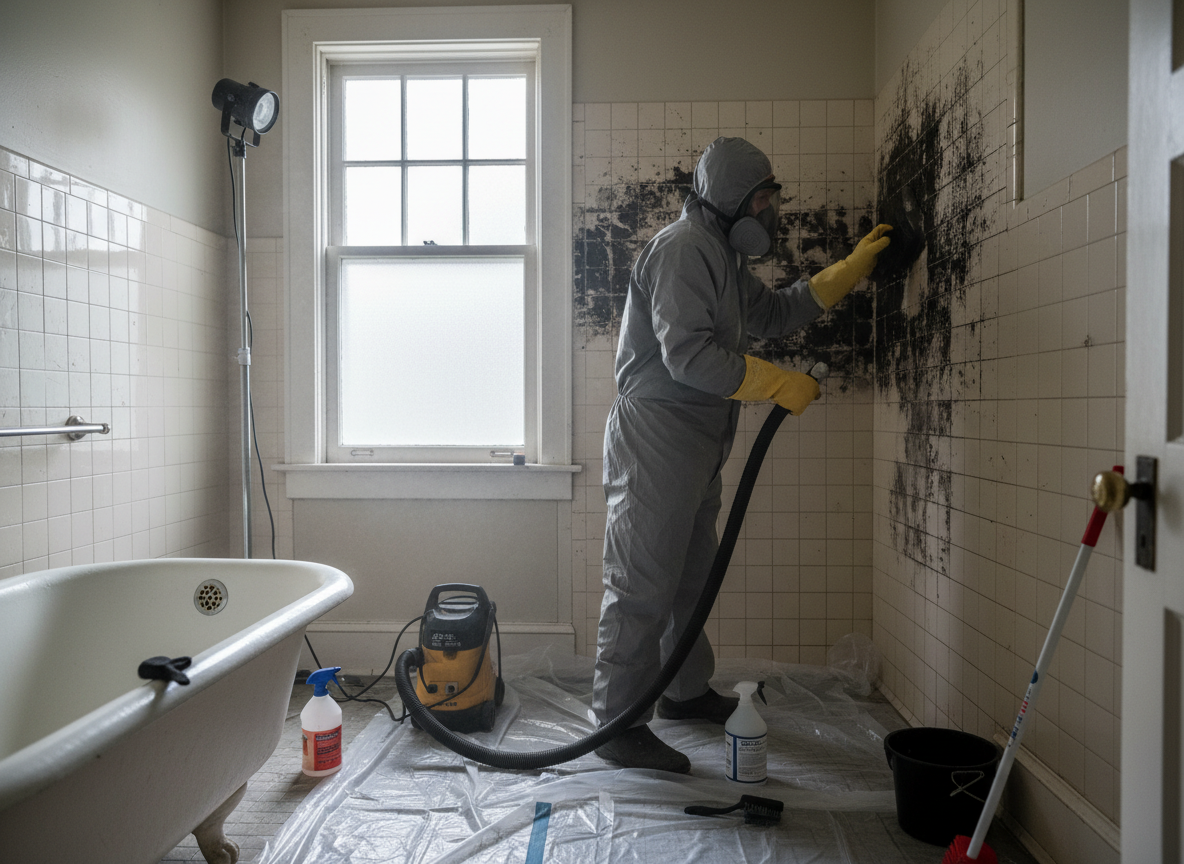
Bathroom mold in Bryn Mawr often starts behind shower tile or in drywall when older exhaust fans fail to pull out steam during the region's hot summers. Homes built before 1980 frequently have single-pane windows and minimal insulation, so condensation sits on surfaces longer and feeds growth along grout lines and baseboards. Removing only the visible spots leaves roots in the paper facing of gypsum board, which is why we cut back to clean substrate and treat the cavity before reinstalling moisture-resistant materials.
We use negative-air machines with HEPA filtration to keep spores from drifting into hallways or adjacent bedrooms, a step that matters in the close-set ranch houses along Juanita Street and surrounding blocks. After source removal we run commercial dehumidifiers until moisture readings drop below 12 percent on the meter, then apply an antimicrobial coating rated for wet zones. This sequence prevents the rapid regrowth that happens when homeowners simply repaint over stained areas without fixing the humidity source.
Code compliance in San Bernardino County requires proper venting for any new bath fan we install, and we always verify the duct run terminates outside rather than into an attic space where spores can spread through insulation. Edge cases include mold that has reached subfloor plywood under vinyl flooring or inside vanity cabinets where leaks from supply lines went unnoticed for months. In those situations we document the full extent with photos before any demolition so the homeowner sees exactly why the scope expanded.
Seasonal spikes occur after winter rains when cooler nights increase indoor humidity even in the mild Bryn Mawr climate. We advise clients to run the fan for twenty minutes after every shower and to keep the door slightly ajar when possible, small habits that reduce the load on the HVAC system and lower the chance of recurrence in stucco-walled homes.
Technician insight
In Bryn Mawr, the thing that catches most people out with bathroom mold removal service is how the 1960s and 70s stucco homes on streets like Juanita trap moisture behind shower surrounds when the original fan ducts terminate in the attic instead of outside.
Hidden mold under vanity in Bryn Mawr home
A homeowner called after noticing musty odor near the tub. Inspection showed a slow supply-line leak had soaked the particleboard vanity base and drywall behind it. We contained the room, removed the vanity and affected wall section, dried the cavity, and reinstalled with moisture-resistant materials. The odor disappeared and no regrowth appeared after three weeks of monitoring.
How it works
- 1
On-site inspection
We measure moisture levels in walls, floors, and ceilings with calibrated meters and map visible and hidden growth using a borescope where needed.
- 2
Containment setup
Plastic barriers and negative air pressure isolate the bathroom so spores do not migrate into living spaces during removal.
- 3
Material removal and cleaning
Affected drywall, insulation, and caulk are cut out; remaining surfaces are HEPA-vacuumed and treated with EPA-registered antimicrobials.
- 4
Drying and verification
Industrial dehumidifiers and air movers run until readings confirm dryness, followed by a final inspection and clearance report.
- 5
Prevention recommendations
We note ventilation upgrades or leak repairs required to keep humidity in check after the job is complete.
Pricing
Cost depends on square footage affected, depth of hidden growth, and any needed ventilation repairs; we provide an upfront written quote after inspection.