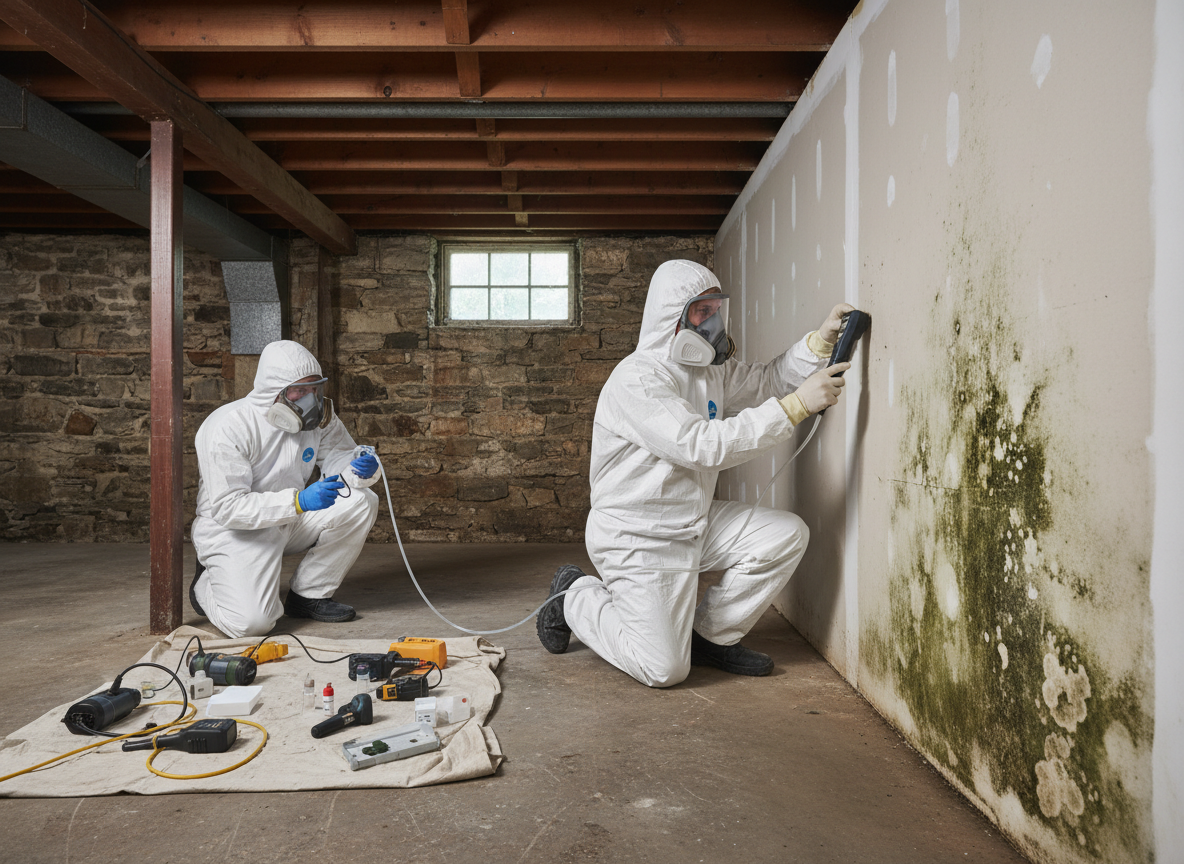
Bryn Mawr sits in San Bernardino County where older commercial stock from the 1960s and 1970s often features flat roofs and single-ply membranes that collect standing water after rare but intense winter rains. These leaks travel along steel decking and show up weeks later as hidden colonies behind drop ceilings or in HVAC plenums. A proper commercial mold inspection starts with moisture mapping using pinless meters and infrared cameras rather than random sampling so technicians can trace the actual water path through the building envelope.
Retail strips along Barton Road and light-industrial sites near the 210 freeway frequently have shared walls and common roof drains that complicate containment. One tenant’s roof leak can push spores into an adjacent unit through unsealed penetrations. Inspectors must document every affected space with photo logs and chain-of-custody air samples because property managers need clear data for insurance adjusters and lease disputes.
San Bernardino County air-quality rules and Cal/OSHA requirements for commercial buildings demand that any visible mold greater than 10 square feet be addressed under controlled conditions. Skipping the inspection step and going straight to remediation often leaves the original moisture source untouched, guaranteeing recurrence within the next rainy season.
Commercial tenants in Bryn Mawr also face stricter liability exposure than homeowners. A failed inspection that misses growth in a break room or server closet can trigger health complaints and lost business days. The inspection report therefore includes square-footage estimates, moisture readings, and recommended containment zones so facility managers can schedule work outside peak operating hours.
Technician insight
In Bryn Mawr the thing that catches most people out with Commercial mold inspection is shared roof drains on 1970s tilt-up buildings. One clogged scupper on the west side of the property sends water under the membrane and into the next suite’s HVAC return, so you have to inspect the entire roof line even when the complaint is only in one tenant space.
Office Suite Moisture Intrusion
A property manager called after employees in a single-story office building on Orange Street reported musty smells near the east wall. Inspection found elevated moisture in the roof deck above the drop ceiling that traced back to a failed seam in the modified-bitumen roof. Air samples confirmed Aspergillus/Penicillium growth. The report gave the manager the exact square footage and containment plan so repairs could be scheduled over a weekend without displacing tenants.
How it works
- 1
Initial Walk-Through
Technician reviews building plans and tenant complaints while walking every accessible space to note visible water stains and musty odors.
- 2
Moisture Mapping
Infrared camera and pinless meters locate active moisture behind walls, above ceilings, and in roof decks without destructive testing.
- 3
Air and Surface Sampling
Spore trap and tape-lift samples are collected from suspect areas and sent to an independent lab for genus-level identification.
- 4
Report and Recommendations
Findings are compiled into a written report with photos, moisture readings, and a prioritized list of repairs needed before any remediation begins.
Pricing
Cost depends on building square footage, number of stories, and whether roof or HVAC access is required.