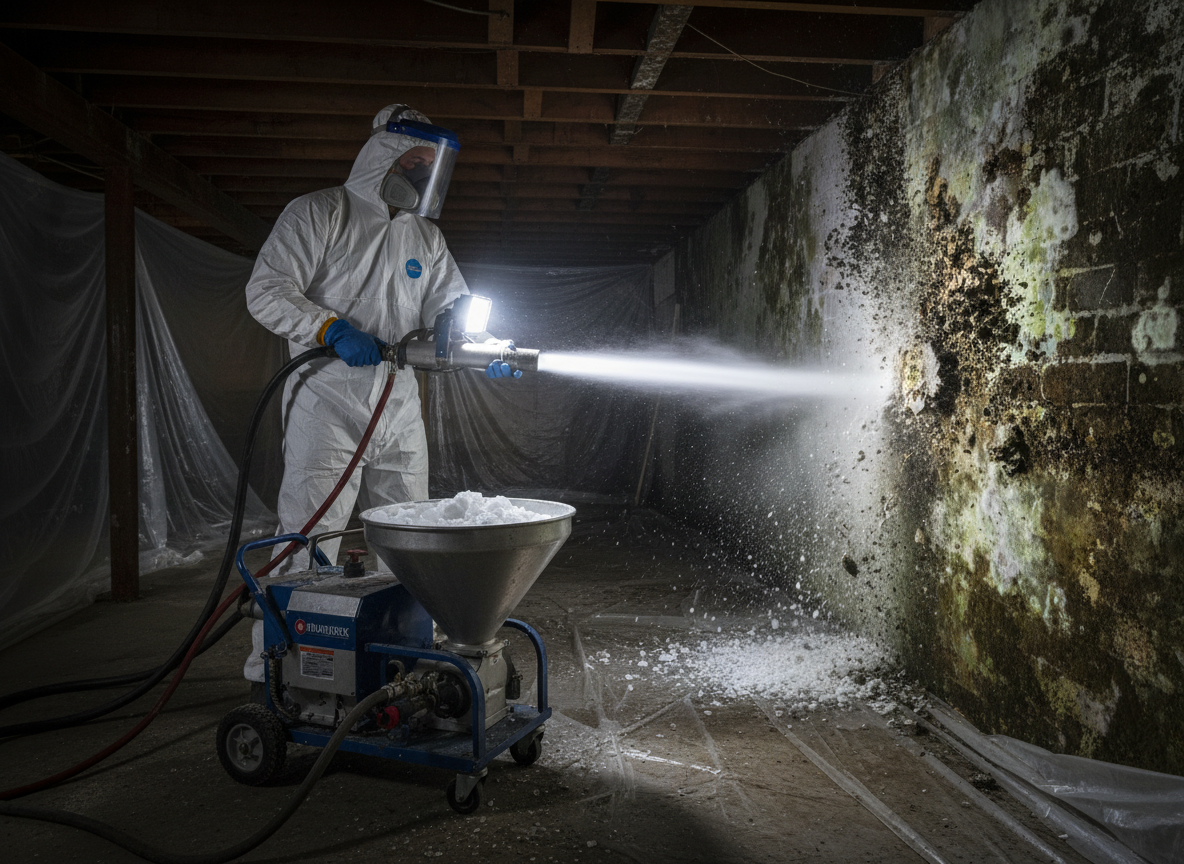
Dry ice blasting propels solid CO2 pellets at high velocity to fracture mold colonies on wood framing, concrete, and stucco without introducing water that can worsen hidden growth in the Inland Empire's occasional heavy winter rains. The process leaves no residue and works well on the older single-story homes common along Juanita Street and nearby streets in Bryn Mawr where moisture often collects behind exterior plaster.
Technicians contain the work area with plastic sheeting and negative air machines before blasting to keep spores from migrating into living spaces. In Bryn Mawr crawlspaces built on raised foundations, the method reaches joists and subflooring that liquid cleaning would miss, though operators must monitor pellet size and pressure to avoid damaging soft redwood or aged plaster lath.
After blasting, HEPA vacuuming and surface sampling confirm removal before any rebuilding begins. Local building practices in San Bernardino County often place HVAC returns near slab edges, so crews check these ducts for spores that can recirculate after a rain event pushes groundwater against foundations.
Dry ice blasting suits unoccupied structures best because the fog and noise require full evacuation during the work. Homeowners in Bryn Mawr should expect the process to take one to two days depending on square footage and whether mold has reached insulation behind walls.
Technician insight
In Bryn Mawr, the thing that catches most people out with dry ice blasting mold is how the 1950s stucco homes trap moisture between the plaster and wood sheathing after winter rains from the San Bernardino Mountains. Homeowners often paint over spots without fixing the irrigation line that keeps the soil wet against the foundation, so the mold returns within months.
Crawlspace Mold After Winter Rain
A Bryn Mawr homeowner noticed musty odors in the living room after heavy rains. Inspection found mold on joists in the crawlspace where irrigation water had pooled against the stem wall. Dry ice blasting removed the growth from the wood without wetting insulation, followed by improved grading outside to direct water away.
How it works
- 1
Initial Assessment
Technicians inspect the property for visible and hidden mold using moisture meters and borescopes, focusing on common Bryn Mawr entry points like roof leaks and irrigation overspray.
- 2
Containment Setup
Plastic barriers and negative air filtration isolate the work zone to prevent spore spread through the single-story layouts typical in the neighborhood.
- 3
Dry Ice Blasting
Pellets are applied at controlled pressure to remove mold from wood, concrete, and stucco surfaces without water or harsh chemicals.
- 4
Final Cleaning and Verification
HEPA vacuuming removes debris followed by air sampling to confirm mold levels have returned to normal background counts.
Pricing
Pricing varies by square footage, surface type, and access difficulty in Bryn Mawr properties.