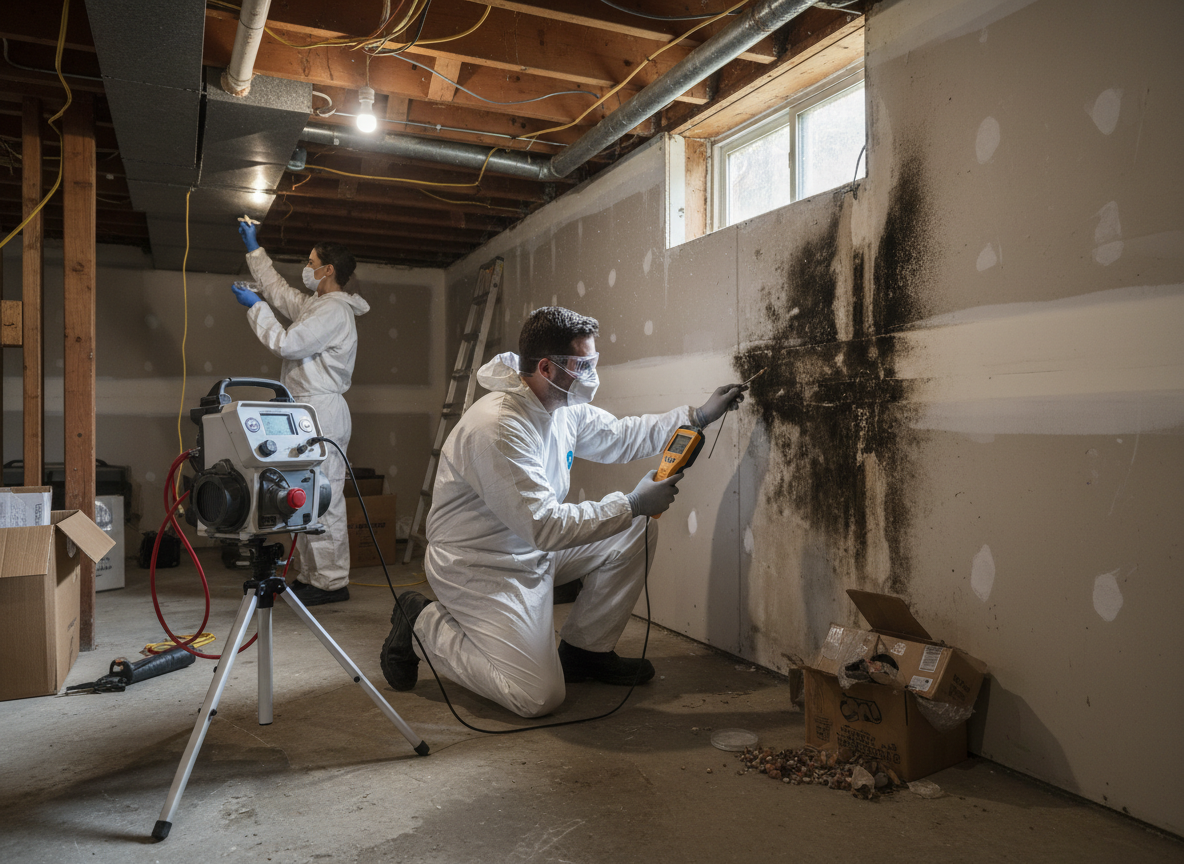
Home mold inspection in Bryn Mawr requires attention to the area's older housing stock, where original plumbing and roof penetrations often allow moisture to reach wall cavities and attics. Inspectors check behind baseboards, inside HVAC returns, and under sinks where leaks from aging galvanized lines create hidden colonies. Surface sampling alone misses these locations, so air sampling combined with moisture meter readings on drywall and framing gives a clearer picture of active growth versus past staining.
Bryn Mawr homes built before 1970 frequently have crawl spaces with limited ventilation that trap humidity from irrigation runoff and seasonal temperature swings. During inspection, technicians lift floor registers and examine subfloor sheathing for elevated moisture content that supports mold on the underside. They also test exterior stucco transitions where cracks let rainwater reach wood framing, a common issue along streets near the original town center.
Edge cases include inspections requested after minor flooding from nearby irrigation canals or when new HVAC units are installed without proper condensate drainage. In these situations, the process includes checking ductwork seams and return air plenums for condensation trails that lead to ceiling mold. Homeowners receive a written map of findings with photos so they can see exactly which areas need attention before any remediation begins.
Common Inspection Triggers
Seasonal temperature changes in the Bryn Mawr area can cause condensation on cooler pipes inside walls, especially where insulation has settled. Residents often notice musty odors near bathrooms or laundry rooms first. An inspection identifies whether the odor source is active growth or simply trapped humidity before any removal work is planned.
Technician insight
In Bryn Mawr, the thing that catches most people out with home mold inspection is how often the real growth sits on the back side of drywall in bathrooms added during the 1960s expansions, where the original exterior wall now sits inside the new plumbing chase and never gets checked unless you pull the vanity or tub surround.
Hidden Growth Behind Added Bathroom
A Bryn Mawr homeowner noticed a persistent musty smell in a hallway after heavy irrigation near the foundation. Inspection found elevated moisture in the wall shared with a 1960s bathroom addition. Moisture mapping traced the source to a slow leak at the original exterior stucco transition. Air samples confirmed higher spore counts inside than outside. The report identified the exact wall section needing opening so the leak could be fixed before any further growth occurred.
How it works
- 1
Initial Walkthrough
Technician reviews homeowner concerns and examines visible areas for water stains, musty smells, and obvious moisture sources around plumbing fixtures and windows.
- 2
Moisture Mapping
Non-invasive meters check drywall, wood, and concrete surfaces throughout living spaces, attic, and crawl space to locate elevated readings that indicate hidden moisture.
- 3
Air And Surface Sampling
Samples are collected from suspect rooms and compared to outdoor controls to determine whether mold spore levels inside the home exceed normal background counts.
- 4
Report And Recommendations
Findings are compiled into a clear document with photos and locations so the homeowner understands the scope before any next steps are discussed.
Pricing
Pricing depends on home size, number of samples, and access difficulty; upfront quote provided after initial walkthrough.