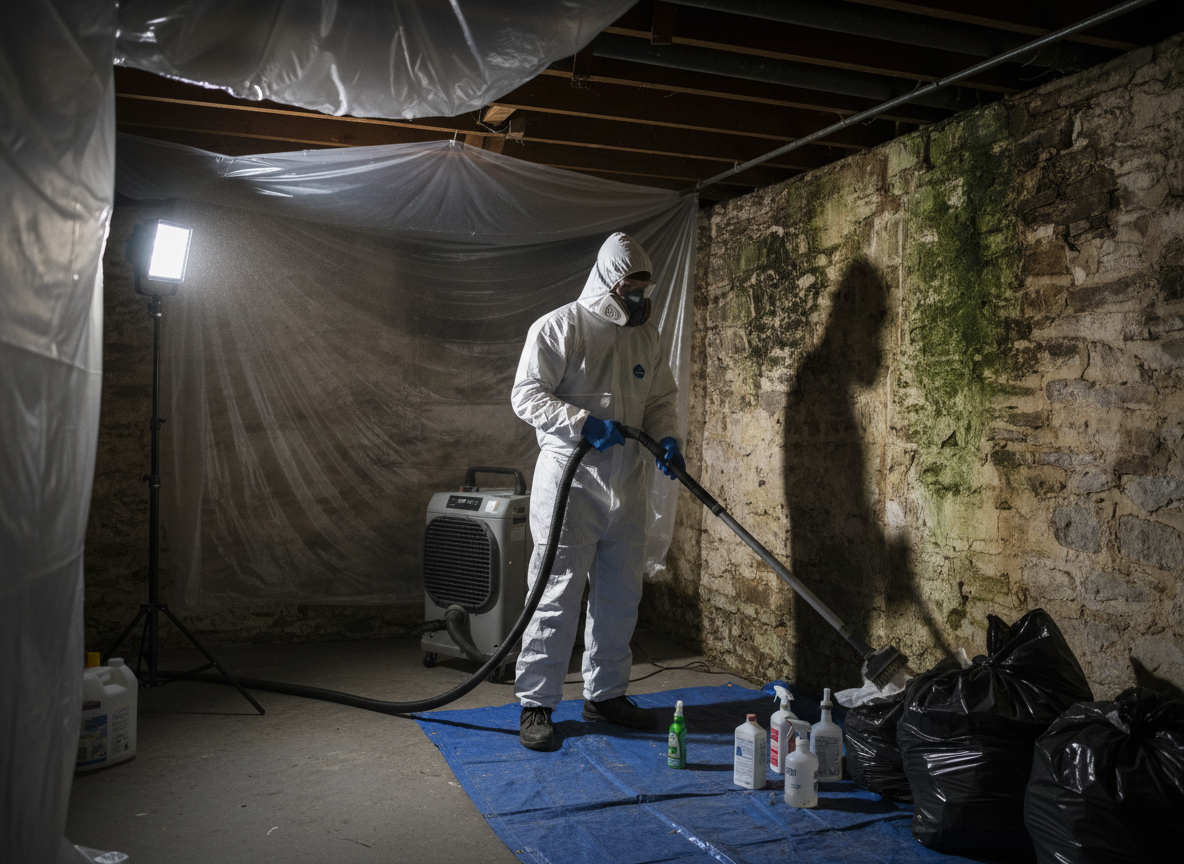
Bryn Mawr properties built in the 1950s and 1960s along streets like Juanita and adjacent blocks often feature crawlspaces with limited ventilation and older plumbing lines that leak slowly over time. These conditions allow mold to establish in subfloor insulation and sill plates when winter rains raise soil moisture levels around foundations. Abatement work here requires lifting floor sections for full access rather than surface treatments alone, followed by drying the soil perimeter to prevent recurrence.
Heavy Santa Ana winds combined with occasional downpours can drive water under roof eaves on single-story ranch homes common in the area. This leads to mold colonies forming in attic rafters and around HVAC ducts where condensation collects. Remediation crews must isolate the attic from living spaces with sealed barriers and run negative air machines for several days before removing contaminated insulation and treating wood members with antimicrobial solutions.
San Bernardino County building practices in Bryn Mawr sometimes left bathroom exhaust fans venting directly into attics instead of outdoors. This creates persistent humidity that feeds mold on drywall and ceiling joists. Proper abatement includes rerouting those vents, replacing affected drywall with moisture-resistant board, and confirming airflow with post-work testing to meet local habitability standards.
Technician insight
In Bryn Mawr, the thing that catches most people out with mold abatement is how many mid-century homes along Juanita Street and nearby have original clay sewer lines that crack and leak under the slab, feeding mold from below that never shows on walls until floors are opened.
Crawlspace Mold After Pipe Leak
A Bryn Mawr homeowner reported a persistent earthy smell near the laundry room. Inspection revealed a cracked cast-iron drain line under the slab allowing water to pool against the foundation. We contained the crawlspace, removed saturated insulation and moldy joists, treated the soil, and rerouted the line to an exterior cleanout. Air sampling cleared the home within a week.
How it works
- 1
Site Assessment
Inspect all accessible areas including crawlspaces and attics for visible growth and moisture sources using moisture meters and borescopes.
- 2
Containment
Set up plastic barriers and negative air pressure to prevent spore migration into clean zones during removal.
- 3
Removal and Treatment
Extract affected materials, clean surfaces with HEPA vacuums, and apply EPA-registered antimicrobials to remaining structure.
- 4
Drying and Verification
Install dehumidifiers and air movers, then confirm dryness levels and clearance with independent air sampling before reassembly.
Pricing
Upfront quotes after inspection; final cost depends on square footage affected, depth of hidden growth, and any needed structural repairs.