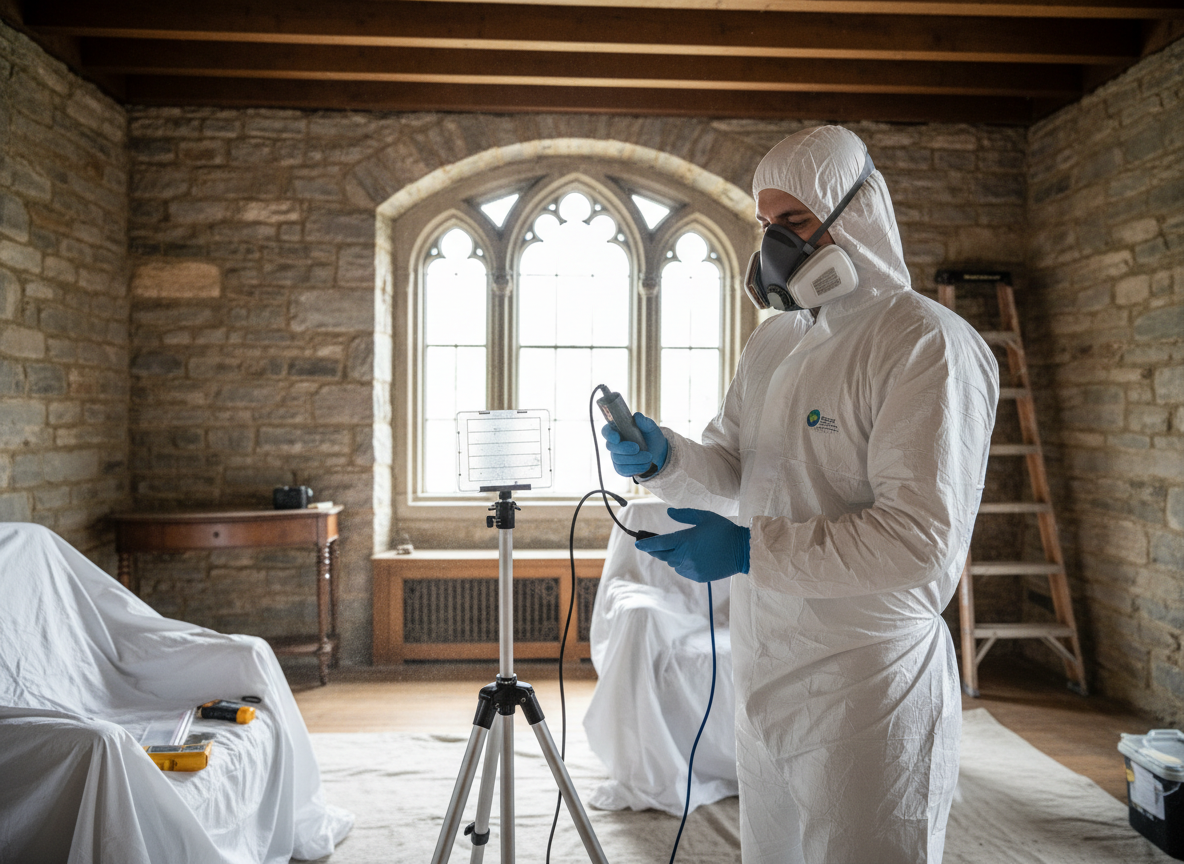
Mold spore testing in Bryn Mawr homes often starts with air sampling in older single-family houses built before 1970 along streets like Juanita and adjacent blocks in San Bernardino County. These properties frequently have crawl spaces and attics where moisture from seasonal rains collects against stucco and older roofing, allowing spores to circulate through HVAC systems. Technicians collect samples from multiple rooms plus outdoor controls to compare indoor versus ambient levels, then send them to a lab for genus identification.
Edge cases appear in homes near the base of the San Bernardino Mountains where poor drainage lets water sit against foundations for days after storms. Testing here includes surface swabs on drywall and wood framing plus moisture meter readings behind cabinets and under sinks. Results guide whether remediation stays limited to visible patches or expands to duct cleaning and insulation removal. Homeowners receive a written report that lists spore types and concentrations rather than a simple pass-fail.
Testing protocols follow current industry guidelines for non-invasive sampling to avoid spreading spores during the process. In Bryn Mawr’s mix of ranch-style and two-story homes, technicians pay special attention to bathrooms and laundry areas where exhaust fans vent into attics instead of outdoors. This common setup allows spores to settle in insulation, so samples are taken both at breathing height and near ceiling registers.
After lab results return, the report notes any species that indicate hidden water damage versus normal outdoor infiltration. This distinction matters in the Inland Empire’s dry climate where residents sometimes run evaporative coolers that introduce additional moisture into older ductwork. The final document includes recommendations for follow-up visual inspections or targeted moisture mapping if counts exceed typical background levels.
Technician insight
In Bryn Mawr, the thing that catches most people out with mold spore testing is older homes where bathroom fans vent into the attic instead of outside; the spores settle in insulation above living spaces and never show up on a quick visual check until we sample the air near the registers.
Attic spore source in a 1960s ranch
A Bryn Mawr homeowner noticed musty odors near the hallway after heavy winter rain. Sampling revealed elevated aspergillus spores at ceiling level but none in the living areas. Further inspection found bathroom exhaust venting into the attic where insulation held moisture against the roof deck. The report directed targeted insulation removal and fan rerouting rather than whole-house treatment.
How it works
- 1
Initial Consultation
Discuss symptoms and property history over the phone or at the 25967 Juanita St location, then schedule a site visit within 24 hours.
- 2
On-Site Sampling
Collect air and surface samples from multiple rooms plus an outdoor control, using calibrated pumps and swabs.
- 3
Laboratory Analysis
Ship samples to an accredited lab for spore identification and concentration counts, usually returning results in 24-48 hours.
- 4
Report Delivery
Provide a written report with findings, comparisons to outdoor levels, and next-step recommendations.
- 5
Follow-Up Guidance
Review results with the homeowner and coordinate any additional testing or remediation if elevated spores are confirmed.
Pricing
Cost depends on number of samples, property size, and whether rush lab processing is requested.