Mold odors in Bryn Mawr often originate from moisture trapped behind walls or under floors in homes built before modern vapor barriers became standard. Removing the smell requires locating the actual growth source rather than masking it, because porous materials like drywall and insulation hold spores and mycotoxins that release volatile compounds over time. In the Bryn Mawr area, seasonal temperature swings between the valley floor and surrounding hills can create condensation cycles that restart odor problems weeks after initial cleaning if the root moisture issue is not corrected.
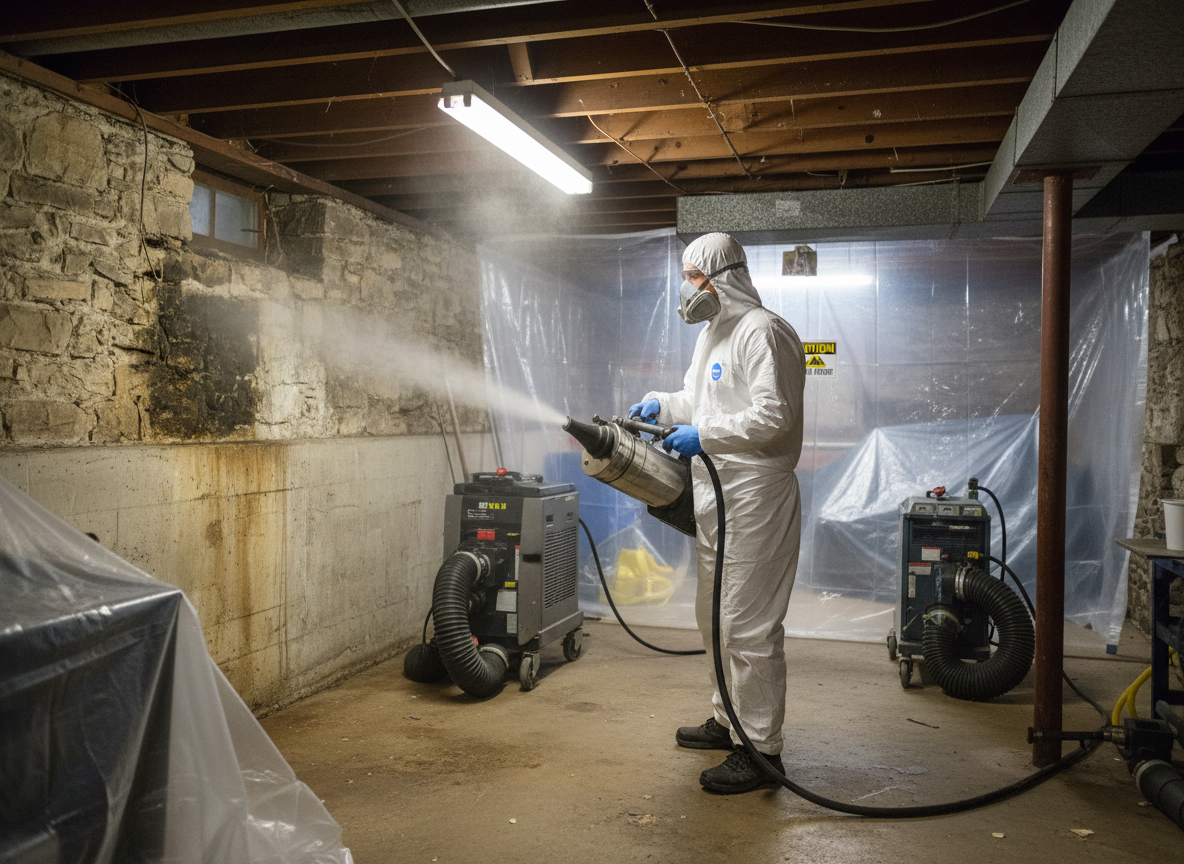
Effective odor removal begins with containment to prevent cross-contamination into unaffected rooms, followed by HEPA vacuuming and removal of saturated materials. Antimicrobial agents are applied only after physical removal, and air scrubbing with activated carbon filters addresses remaining airborne particles. Edge cases include crawlspaces common in older Bryn Mawr housing stock where limited access forces technicians to work in sections, and attics where insulation must be fully replaced rather than treated in place to eliminate embedded odors.
Homeowners sometimes attempt DIY foggers or ozone machines, but these leave the underlying colony intact and can drive spores deeper into HVAC systems. Professional verification uses moisture meters and air sampling to confirm levels have returned to normal before reconstruction. In Bryn Mawr and surrounds, proper documentation of the work also helps when properties change hands, as buyers often request proof that odors were addressed at the source.
Technician insight
In Bryn Mawr, the thing that catches most people out with odor removal mold is how the original plaster and lathe walls in homes near Juanita Street hold moisture from winter rains long after the surface feels dry, so the smell returns unless those cavities are opened and dried properly.
Persistent Musty Odor in Bryn Mawr Home
A Bryn Mawr homeowner reported a recurring musty smell in the hallway after recent rains. Inspection found hidden mold behind baseboards where a slow roof leak had soaked the plaster wall. The crew removed the affected section, treated the framing, and ran air scrubbers until readings cleared. The odor did not return after reconstruction.
How it works
- 1
Inspection and Source Location
Technicians examine walls, ceilings, and crawlspaces with moisture meters and borescopes to find hidden growth causing the odor.
- 2
Containment Setup
Plastic barriers and negative air machines isolate the affected zone to stop spores from spreading through the rest of the Bryn Mawr home.
- 3
Material Removal and Treatment
Saturated drywall, insulation, and other porous items are removed, followed by antimicrobial application on remaining surfaces.
- 4
Odor Neutralization and Verification
Air scrubbers with carbon filters run until readings show the odor compounds are gone, then clearance testing confirms the space is clear.
Pricing
Pricing depends on the size of the affected area, access difficulty, and amount of material that must be removed; upfront quotes follow inspection.