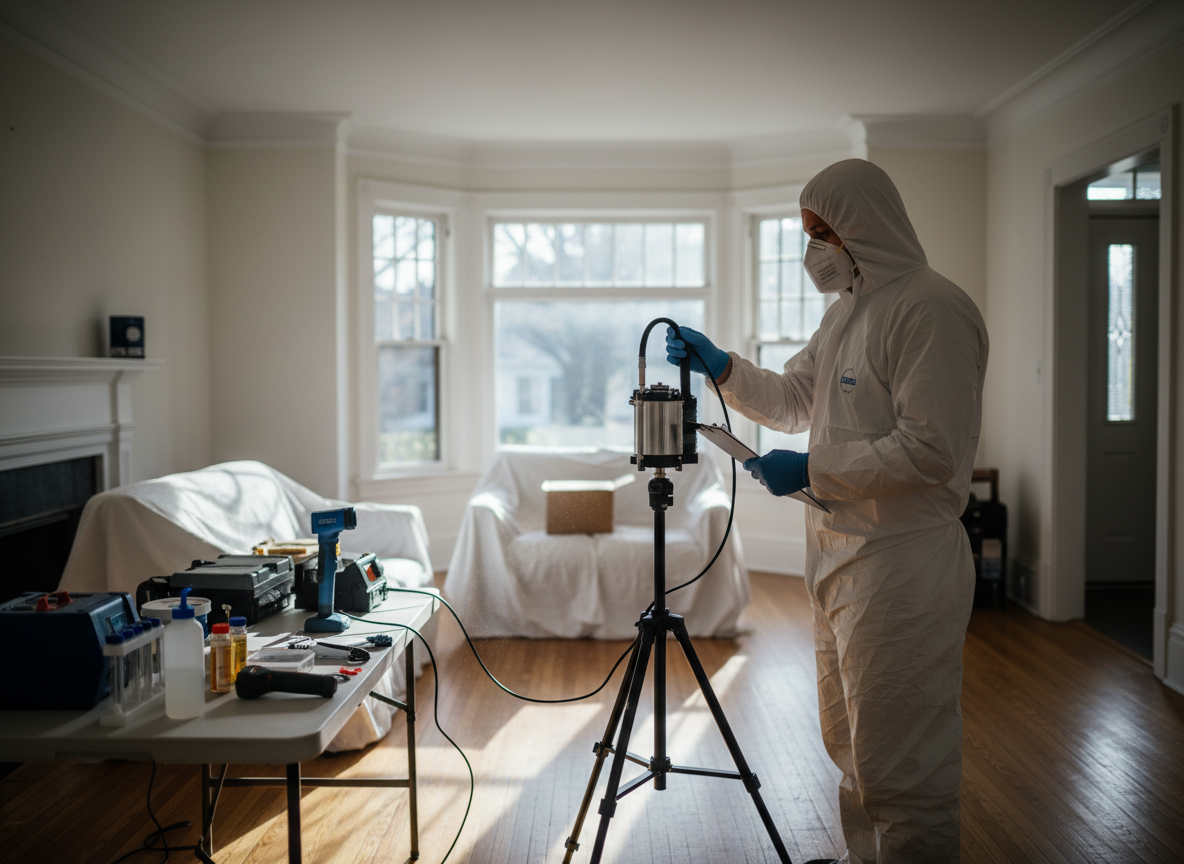
Post remediation mold testing requires separate sampling from the original remediation crew to avoid conflicts of interest. Technicians collect air samples from multiple rooms plus an outdoor control, surface swabs from previously affected materials, and moisture readings in wall cavities. In Bryn Mawr homes built before 1970, lath and plaster walls often trap residual spores behind layers that look clean on the surface, so we pull baseboards and check sheathing. Results are compared against outdoor baselines because San Bernardino County air frequently carries high counts of common outdoor molds after Santa Ana winds.
Clearance criteria follow IICRC S520 guidelines rather than arbitrary zero-spore thresholds. We document that visible mold is gone, moisture sources are corrected, and airborne spore levels inside do not exceed outdoor levels by more than a small factor. Older Bryn Mawr neighborhoods near the railroad tracks sit on slightly lower ground where seasonal rains can re-wet footings, so we always recheck crawl space humidity even after attic or bathroom work is finished.
Homeowners sometimes schedule testing too soon after drying equipment is removed. We require at least 48 hours of normal ventilation and HVAC operation so any remaining spores settle or are captured by filters. This timing prevents false negatives that later lead to callbacks when furniture is moved back in.
Technician insight
In Bryn Mawr the thing that catches most people out with post remediation mold testing is older crawl spaces under 1950s homes along Juanita Street. Even after bathroom or kitchen work upstairs, poor grading lets winter rain re-wet the footings, so spores show up again in the air samples if we do not check the subfloor moisture at the same time.
Crawl Space Recontamination
A Bryn Mawr homeowner called after a bathroom leak remediation. We found the upstairs walls cleared but air samples from the living room still elevated. Probing revealed the crawl space soil had stayed damp because the downspout emptied against the foundation. We documented the moisture, recommended exterior grading fixes, and the second round of testing passed after the drainage was corrected.
How it works
- 1
Site Walk and Sampling Plan
We review the prior remediation scope, identify all treated rooms, and mark locations for air cassettes, tape lifts, and moisture probes while the property remains unoccupied.
- 2
Sample Collection
Air samples run for five minutes at breathing height in each zone, surface samples target previously stained areas, and moisture meters check framing and subfloors for hidden dampness.
- 3
Laboratory Analysis
Samples go to an accredited lab for spore count, species identification, and comparison against the outdoor control sample taken the same day.
- 4
Report and Clearance Decision
We deliver a written report within 48 hours stating whether levels meet clearance criteria or if additional remediation is required before re-entry.
Pricing
Cost depends on number of rooms sampled and turnaround time; typical residential post remediation tests run between several hundred and low four figures.