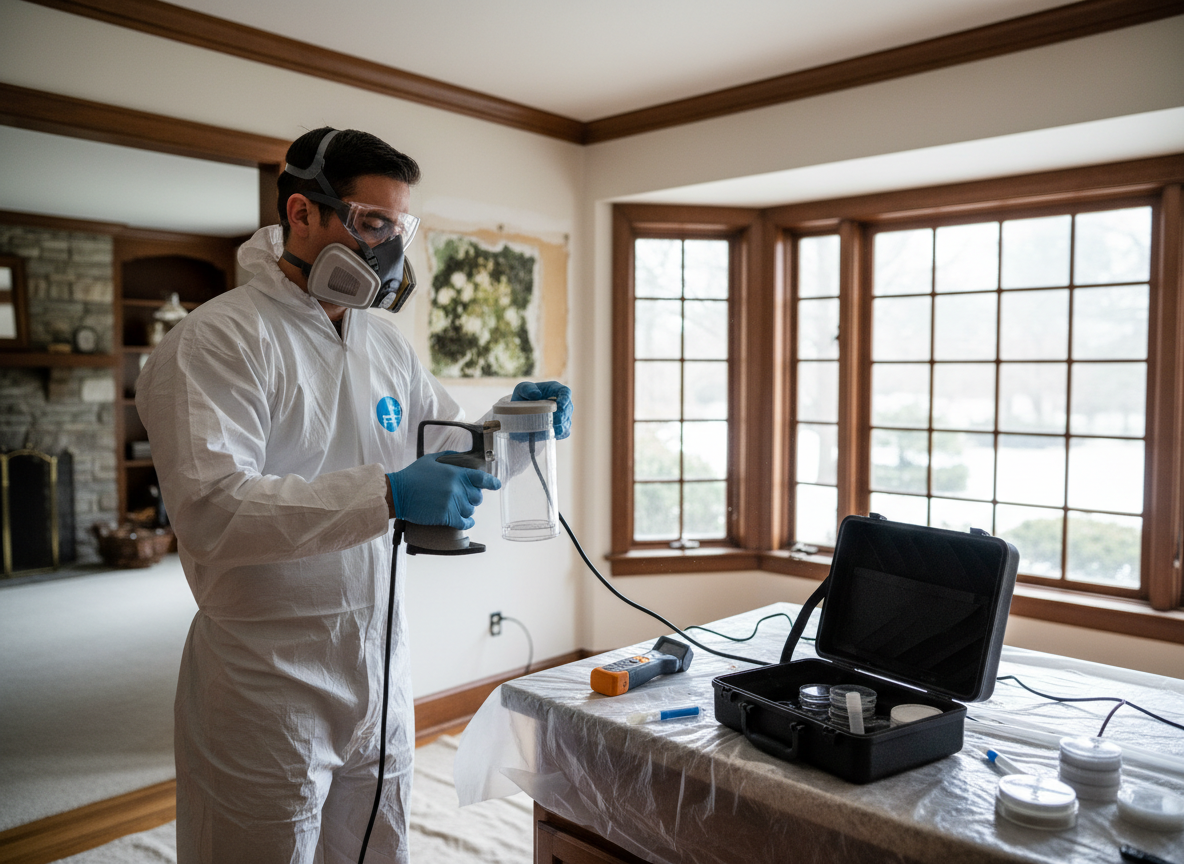
Residential mold testing in Bryn Mawr starts with a room-by-room visual check for water stains, musty odors, and hidden moisture behind walls or under flooring. Technicians use moisture meters and thermal imaging to locate damp areas common in homes built during the 1950s through 1980s along streets like Juanita and adjacent neighborhoods near the I-10 corridor. Air and surface samples are collected and sent to independent labs for species identification, which matters when spores from Stachybotrys or Aspergillus appear in older plaster or stucco assemblies.
Edge cases frequently arise after roof leaks or plumbing failures in crawl spaces where poor ventilation allows mold to spread unseen. Testing protocols follow guidelines that distinguish between normal outdoor spore levels and indoor amplification, especially during the brief winter rain periods that affect San Bernardino County properties. Homeowners receive a written report with lab results, photos, and specific remediation recommendations rather than generic advice.
Testing also covers HVAC systems where ducts can distribute spores throughout single-story ranch homes typical in Bryn Mawr. Surface swabs from baseboards and attic insulation help identify whether visible discoloration is active mold or staining. Follow-up clearance testing after any cleanup confirms spore counts have returned to outdoor baselines before occupants re-enter affected spaces.
Technician insight
In Bryn Mawr, the thing that catches most people out with Residential mold testing is older single-story homes with stucco exteriors and slab foundations where a small pipe leak under the kitchen can send moisture under the slab and into adjacent drywall without obvious ceiling stains.
Hidden Moisture After Winter Leak
A Bryn Mawr homeowner on a side street off Juanita noticed a musty smell in the laundry room after heavy rains. Inspection found elevated moisture behind the washer hookup wall. Air samples confirmed indoor spore amplification. Targeted remediation followed by clearance testing restored safe levels.
How it works
- 1
Initial Assessment
Review reported symptoms and property history over the phone or on site.
- 2
On-Site Inspection
Walk-through using moisture meters and thermal cameras to map damp zones.
- 3
Sample Collection
Air, surface, and bulk samples taken from multiple rooms and sent for lab analysis.
- 4
Report Delivery
Detailed findings with photos, lab data, and next-step guidance provided within days.
Pricing
Pricing based on square footage, number of samples, and whether HVAC or crawl space access is required; upfront quotes provided before work begins.