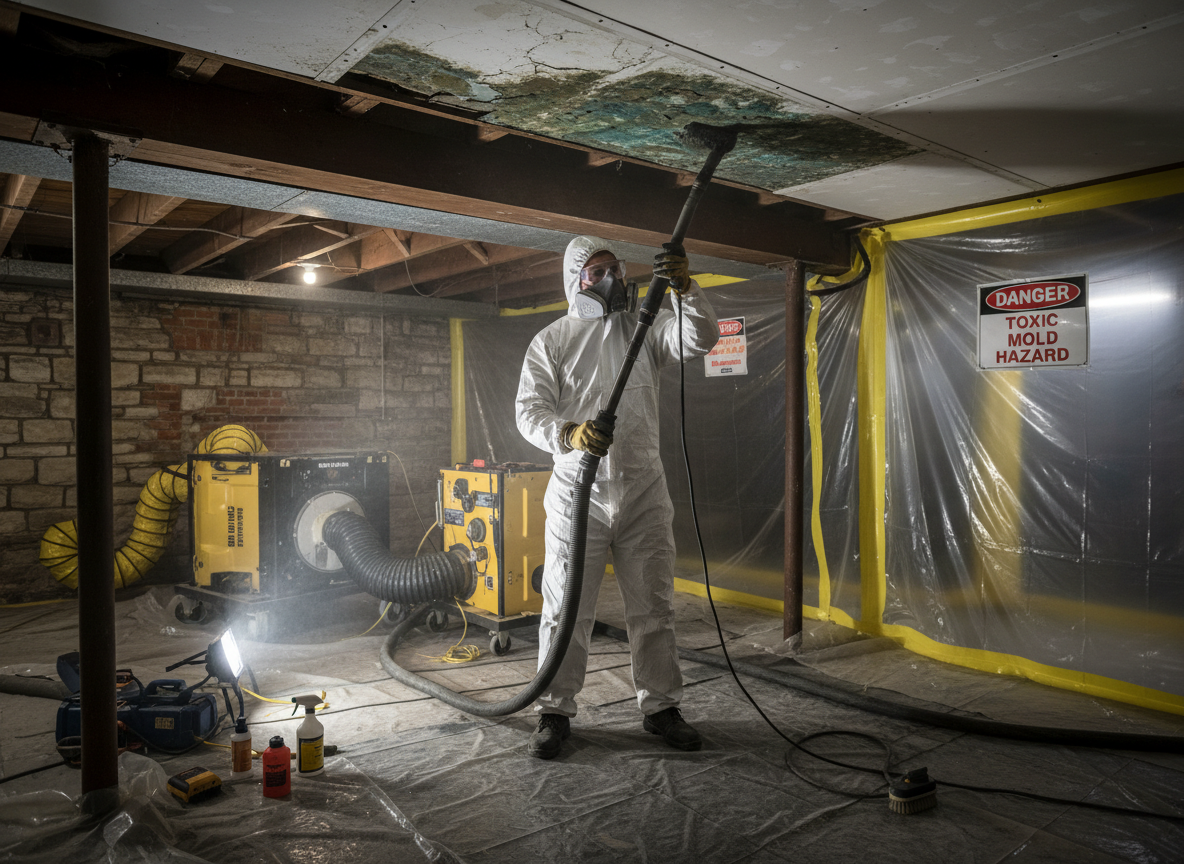
Toxic mold removal in Bryn Mawr homes often starts with older stucco and slab-on-grade construction common throughout San Bernardino County neighborhoods. These structures trap moisture from irrigation lines or roof penetrations behind walls, allowing black mold to colonize drywall paper and insulation without visible surface signs. Technicians must use negative air machines and sealed containment barriers to prevent spore migration into living spaces during demolition.
Edge cases arise after winter rains when water migrates along utility trenches into crawl spaces of 1960s-1970s homes near Loma Linda. Removing affected subflooring requires HEPA vacuuming and antimicrobial application on joists, followed by moisture meter verification to confirm levels below 15 percent before reconstruction. Failure to address the source leaves residual colonies that reactivate during summer humidity spikes.
Clearance testing after toxic mold removal follows San Bernardino County air quality guidelines, sampling both treated zones and adjacent rooms. Homeowners receive a written report detailing spore counts before and after work. This step protects against recontamination from HVAC systems that can redistribute fragments if filters remain unchanged.
Technician insight
In Bryn Mawr, the thing that catches most people out with toxic mold removal is irrigation leaks under 1970s slab homes that send water along utility trenches into crawl spaces during the few heavy rain events we get each winter.
Crawl Space Growth After Irrigation Line Failure
Problem: persistent musty odor in a Bryn Mawr home following winter rains. We found: water from a cracked irrigation line had traveled under the slab into the crawl space, saturating insulation and joists. What we did: contained the area, removed saturated materials, treated framing, and confirmed drying. Outcome: cleared testing allowed safe re-entry with no recurrence after line repair.
How it works
- 1
Initial Assessment
On-site inspection with moisture mapping and air sampling to locate all affected materials in Bryn Mawr structures.
- 2
Containment Setup
Installation of plastic barriers and negative air pressure to isolate the work zone from the rest of the home.
- 3
Removal and Disposal
Physical extraction of contaminated drywall, insulation, and other porous materials followed by HEPA cleaning of remaining surfaces.
- 4
Drying and Verification
Equipment drying plus post-remediation air testing to confirm the space meets clearance standards before rebuild.
Pricing
Upfront quotes provided after inspection, scaled to square footage and hidden extent of growth.