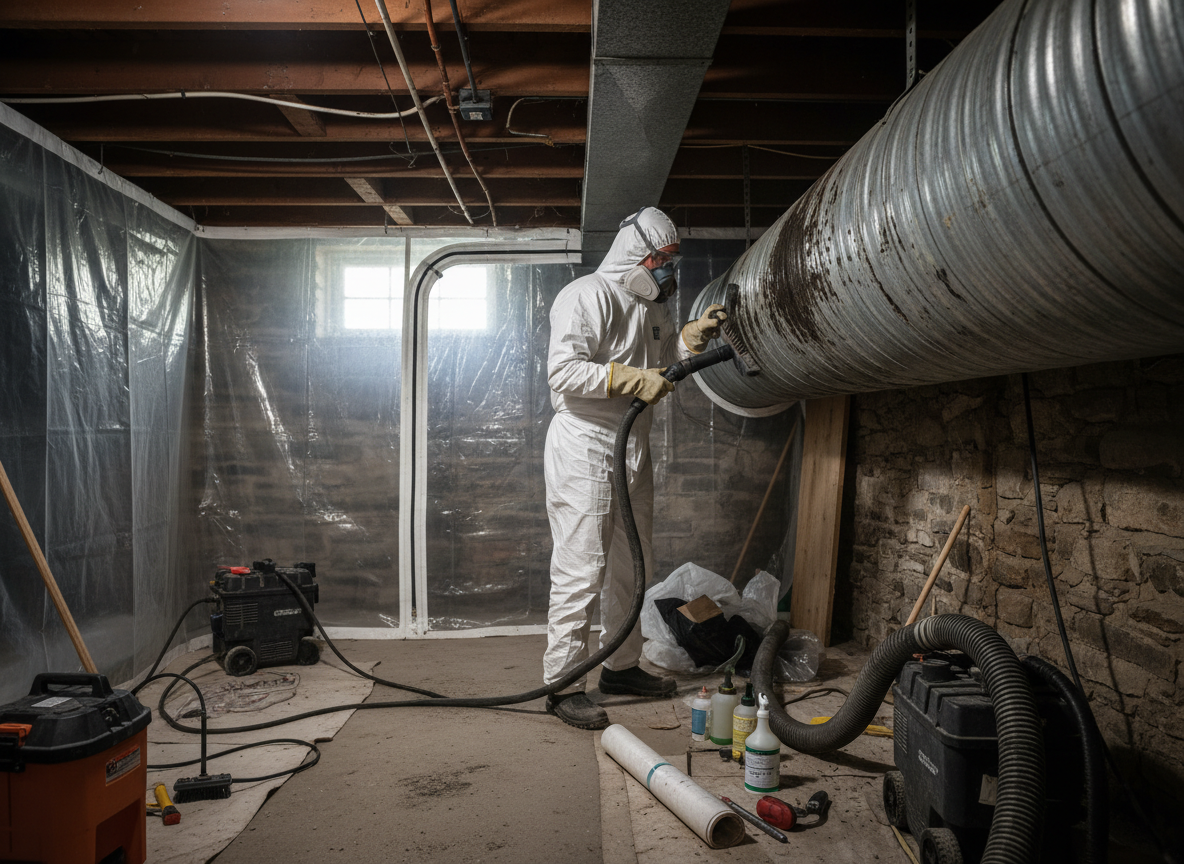
Ventilation mold remediation in Bryn Mawr targets growth inside ductwork, attic spaces and HVAC returns where temperature swings allow condensation to collect. Older housing stock along Juanita Street and surrounding neighborhoods often features single-wall ducts and minimal insulation that trap moisture during the cooler nights common in the Inland Empire. Technicians isolate affected runs, use negative air machines to contain spores, and remove contaminated insulation without disturbing living spaces. Access through roof vents or crawl spaces requires care to avoid spreading debris into occupied rooms.
Dry Santa Ana conditions alternate with occasional marine layer moisture that reaches Bryn Mawr from the west, creating repeated wetting and drying cycles inside metal ducts. This pattern promotes hidden mold on fiberglass liners and at register boots. Remediation includes HEPA vacuuming of all interior surfaces, antimicrobial treatment of non-porous components, and replacement of porous lining where growth has penetrated. Post-cleaning verification uses visual inspection plus air sampling to confirm spore levels match outdoor baselines before the system is returned to service.
Homeowners sometimes attempt DIY cleaning with foggers or bleach wipes that leave roots inside seams and joints. Professional work addresses the full airstream path from intake to supply registers and checks for roof leaks or bathroom exhaust backdrafting that reintroduces moisture. In Bryn Mawr properties with slab foundations, return ducts in walls can pull damp air from under the structure, requiring sealing and rerouting as part of the remediation.
Technician insight
In Bryn Mawr the thing that catches most people out with ventilation mold remediation is single-wall ducts running through unconditioned attics that collect condensation every time the marine layer pushes inland at night, especially in homes built before the 1980s along streets like Juanita.
Hidden Duct Mold After Roof Leak
A Bryn Mawr homeowner reported musty air from ceiling registers following winter rains. Inspection found water had entered an attic duct seam and wicked into the liner. The run was isolated, liner removed, surfaces treated, and the seam sealed with mastic before new insulation was added.
How it works
- 1
Inspection and Containment
Technicians map all accessible duct runs and establish negative pressure zones using plastic barriers and HEPA filtration to prevent spore migration into living areas.
- 2
Source Removal
Contaminated insulation, liner and debris are extracted through existing access points or new openings cut only where necessary, then sealed immediately.
- 3
Surface Treatment and Drying
Non-porous duct surfaces receive EPA-registered antimicrobials while dehumidifiers and air movers eliminate residual moisture in the ventilation path.
- 4
Restoration and Verification
New insulation or lining is installed where needed, registers are cleaned, and post-remediation air samples confirm clearance before the system restarts.
Pricing
Cost depends on the number of affected runs, accessibility through attics or walls, and whether insulation replacement is required.